NINE CHAPTERS / NON-METAL FIVE-AXIS MACHINES

Linear-motor five-axis machining
Engineered for non-metals

NINE CHAPTERS focuses on non-metal tooling and composite machining. Direct drives, structural stiffness, vibration control and precision feedback support high-speed machining and dependable finishing of large contoured surfaces.

Tooling boardsTooling pastesCarbon-fiber components
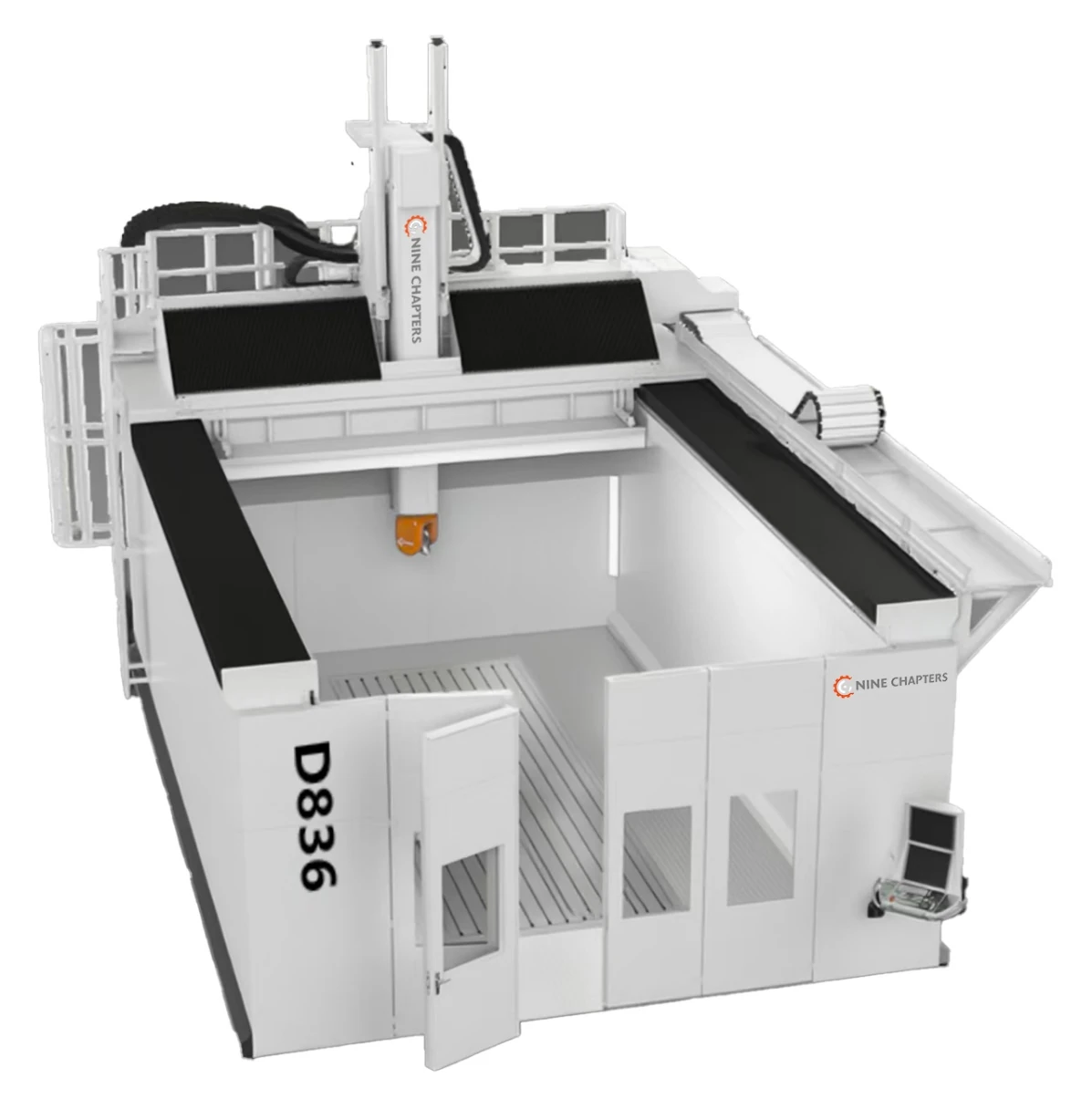
NINE CHAPTERS D836 · Machine render · configuration defined in the technical agreement
NINE CHAPTERS D836Machine render · configuration defined in the technical agreement
XYZ linear motors

Direct drives with precision position feedback

A / C torque motors

Direct-drive head for simultaneous five-axis machining

Metal + mineral casting

Load-bearing stiffness and vibration damping

01 CORE ADVANTAGE

Direct linear drives: responsive motion, a shorter transmission chain

NINE CHAPTERS specialises in linear-motor-driven five-axis machines for non-metal machining. The XYZ linear axes generate thrust directly, without rack-and-pinion or ball-screw conversion of rotary motion into linear motion. This reduces the effects of transmission backlash, elastic deformation and wear. Linear-encoder position feedback and a matched control system support responsive motion and stable toolpath control on complex surfaces.

Reduce transmission-related accuracy variation and maintenance demands, while controlling motion quality through frequent acceleration, reversal and long travels.

DIRECT DRIVELINEAR MOTORPOSITION FEEDBACK

Principle schematic · no rack or ball-screw transmission

02 CORE ADVANTAGE

Protection and precision matter in non-metal machining

Tooling boards, tooling pastes and fiber-reinforced composites present distinct machining challenges: large contoured surfaces, high-speed cutting, abrasive dust and the electrical conductivity of carbon-fiber dust. NINE CHAPTERS designs machining routes and protection around these conditions, including dust extraction at the cutting zone, protection of precision feedback components and access for servicing key parts. Where roughing and finishing must be performed on the same machine, the spindle, structure, cutters and workholding are matched to both stock removal and final surface requirements.

Make protection support machine reliability and lasting accuracy, rather than judging unloaded accuracy without considering the dusty machining environment.

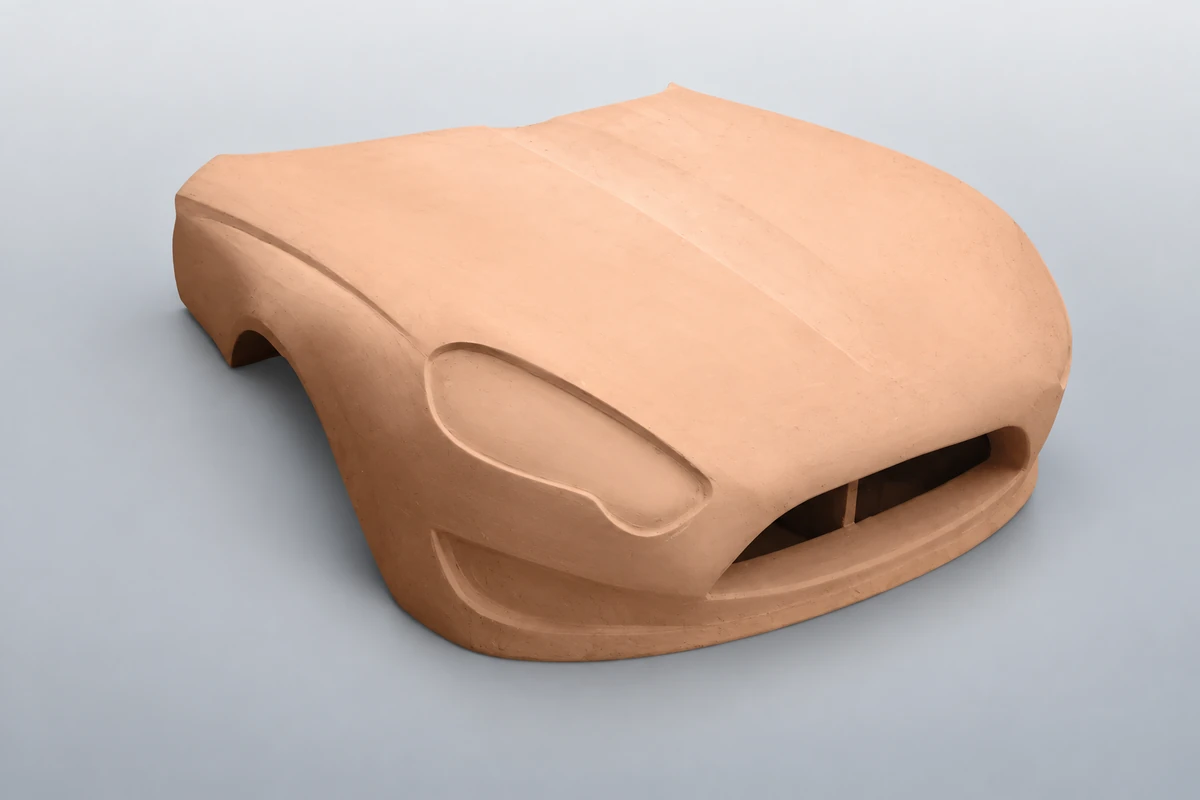
Tooling-board forms
Tooling-board forms
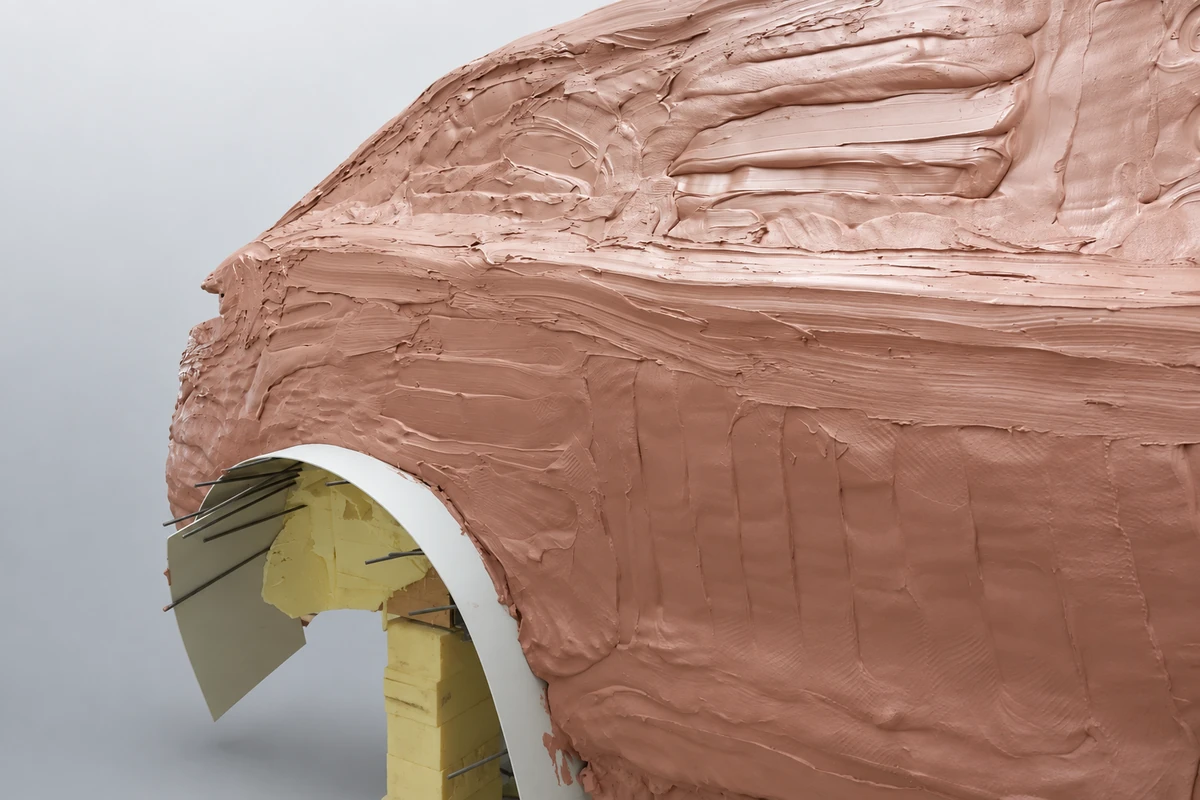
Paste master models
Paste master models
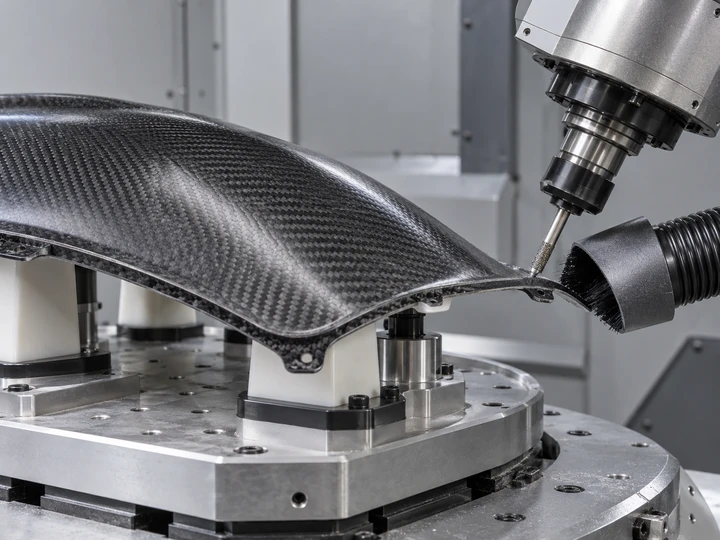
Carbon-fiber components
Dust capture at sourcePrecision-component protectionConductive-dust controlPractical service access

Protection is specified for the material, machining area and project requirements.

03 CORE ADVANTAGE

Metal provides stiffness; mineral fill improves damping

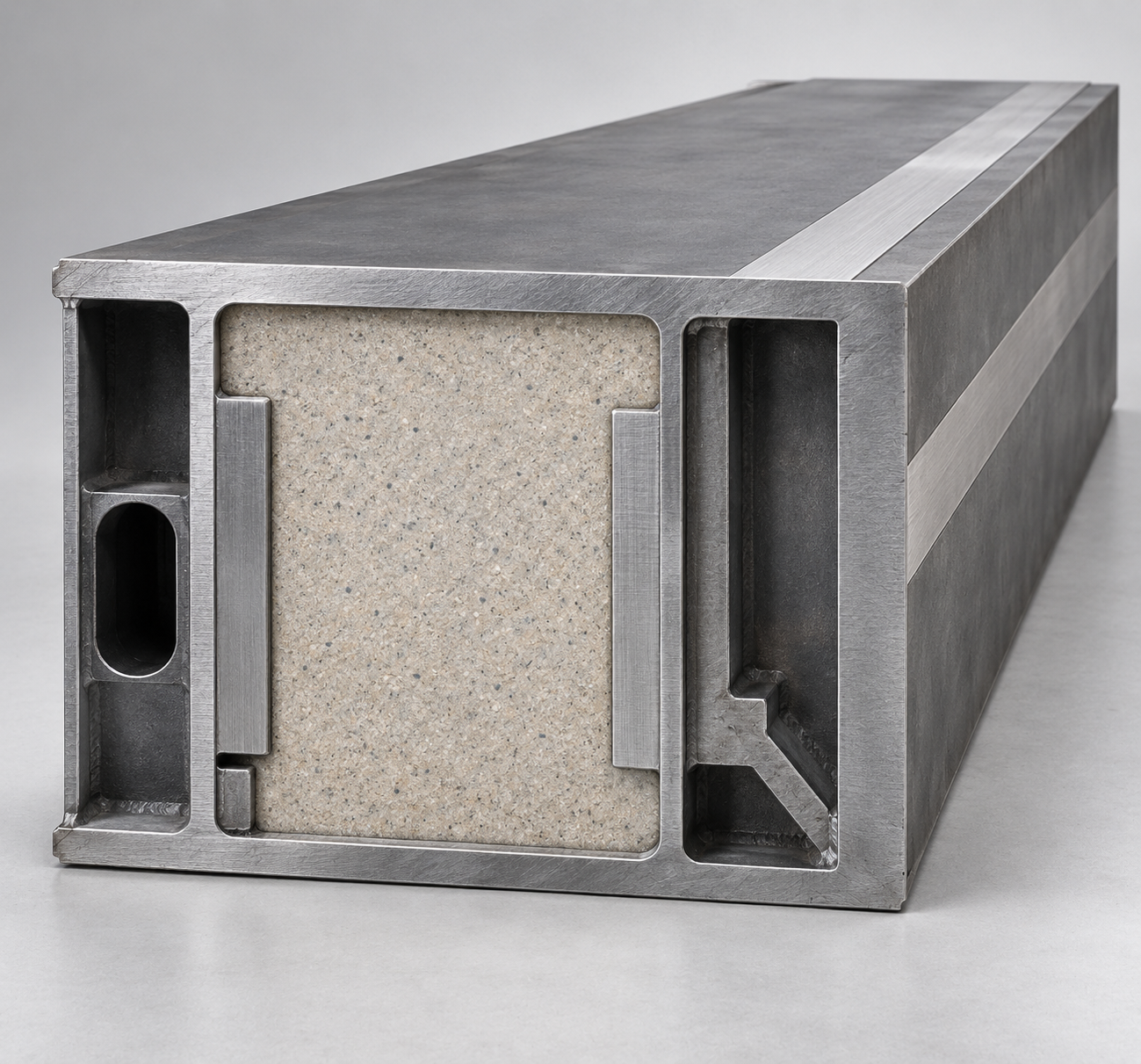
On models with a hybrid bed, the metal load-bearing structure provides a defined load path and the foundation for stiffness. Selected stationary cavities are filled with mineral casting to improve damping and suppress structural resonance. NINE CHAPTERS treats stiffness and vibration control as one design task, combining stress relief, ageing, precision machining and geometric checks after assembly. This approach supports large-surface machining, particularly finishing quality after roughing.

Support cutting loads through structural stiffness and control vibration through damping, creating a stronger foundation for dimensional stability and surface quality.

Bed cross-section illustration · load-bearing metal with continuous mineral fill One guideway mounting face on the top and one on the side; rails and magnet plates are not installed in this image.
Bed cross-section illustration · load-bearing metal with continuous mineral fill
One guideway mounting face on the top and one on the side; rails and magnet plates are not installed in this image.

04 CORE ADVANTAGE

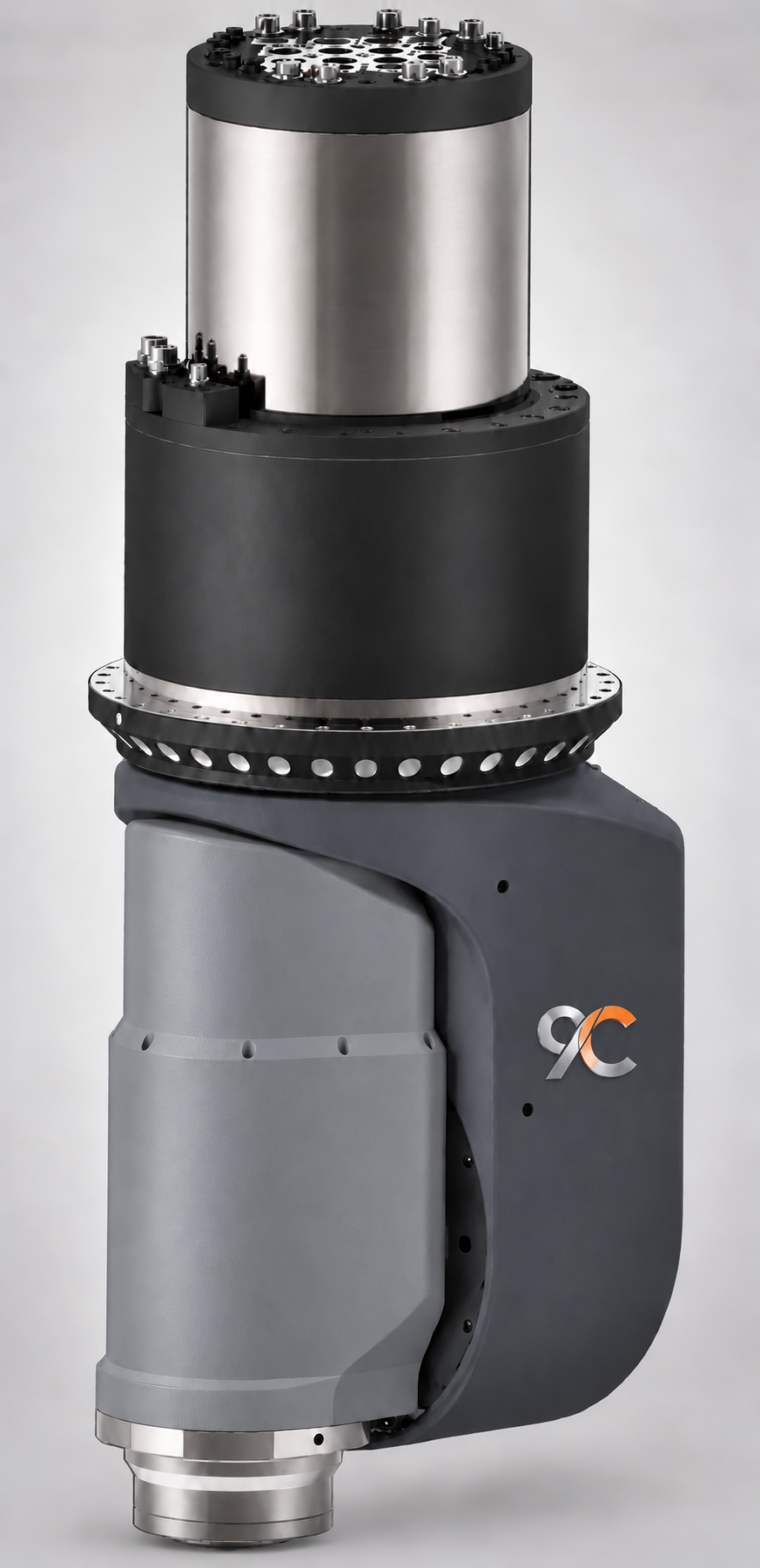
A direct-drive head combining precision, torque and low mass

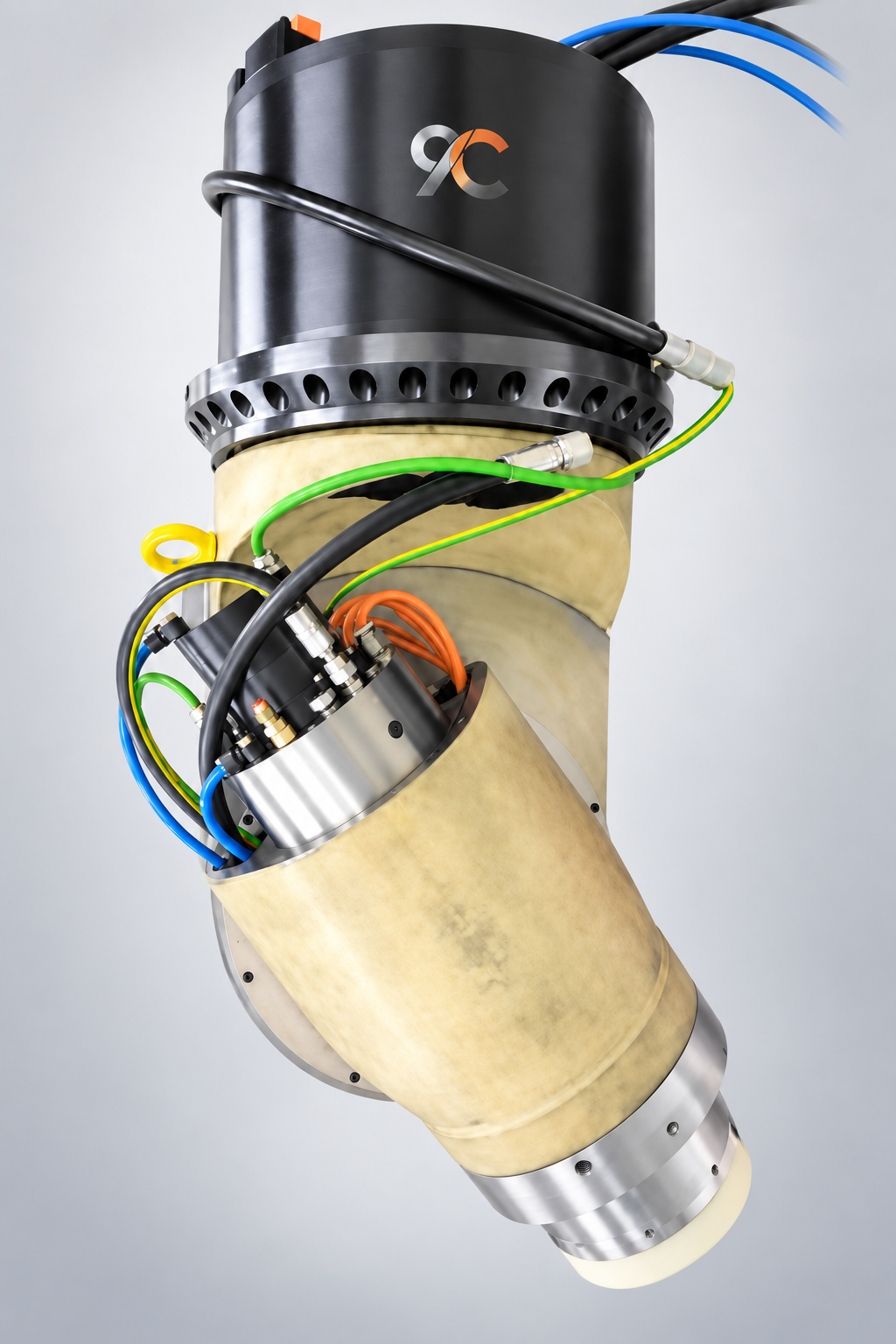
The direct-drive heads promoted by NINE CHAPTERS use torque motors on the A/C rotary axes, removing the belt transmission stage. Their value extends beyond indexed positioning to response, smooth motion and orientation control during simultaneous five-axis machining. Selection considers angular feedback, head stiffness, cooling and tool access together; calibration and cutting trials after assembly verify machine performance. The head combines high precision and high torque with a lightweight design, weighing approximately 661 lb (300 kg) to reduce the mass of moving components. Actual weight depends on the selected spindle, accessories and head configuration.

Control tool orientation and tool-tip trajectories more consistently on complex surfaces, beyond comparing static figures in head brochures.

NINE CHAPTERS 9C · Head exterior
Head exterior
NINE CHAPTERS 9C · Assembly view
Assembly view

Head imagery and 9C branding · click to enlarge
Appearance, spindle and accessories are defined in the selected model's technical agreement.

05 CORE ADVANTAGE

Measure productivity at each accepted part

Productivity on complex surfaces depends on sustaining effective feed while meeting tolerances and surface requirements, not simply on maximum rapid-traverse speed. Linear-motor response, toolpaths, five-axis access, tool changes and workholding together determine cycle time. NINE CHAPTERS recommends comparing roughing, finishing, non-cutting time and subsequent surface finishing on a representative customer part, so productivity gains can be verified through accepted parts.

Base machine selection on the time and cost per accepted part, rather than rapid-traverse speed.

RoughingStock removal and stable workholding
FinishingSurface quality and dimensional tolerance
Non-cutting timeTool changes, positioning and setups
Surface finishingInspection, sanding and rework

ENGINEERING CAPABILITIES

Keep high-speed machining under control.

Lasting accuracy depends on feedback, structure, thermal management and machining process working together. These three capabilities connect component performance to the quality of the customer's part.

06 / ENGINEERING SUPPORT

Full closed-loop feedback and five-axis calibration

Linear encoders measure linear-axis positions directly, providing feedback for full closed-loop control. Five-axis machines also require machine-level verification of rotary-axis angular feedback, rotation-center calibration and tool-tip position control. NINE CHAPTERS develops acceptance plans covering positioning, reversal, gantry synchronisation and tool-tip performance at different head angles, so axis-component accuracy serves part accuracy.

07 / ENGINEERING SUPPORT

Thermal management for sustained machining

During prolonged high-speed machining, temperature differences in motors, spindle, head and the environment can affect tool-tip position. NINE CHAPTERS project specifications consider cooling, heat-source isolation, temperature measurement, warm-up and compensation together, focusing on temperature gradients in large structures and thermal drift in critical components. Thermal management is specified for the model and operating conditions, allowing accuracy to be checked both from cold and during sustained machining.

08 / ENGINEERING SUPPORT

Match materials and machining processes

EPTEK's experience in tooling materials and processes provides an application context for NINE CHAPTERS machine selection. Tooling boards, tooling pastes and composites differ in their cutter, support, machining allowance and surface requirements. Project discussions start with the material, part geometry and quality objectives, then define the spindle, head, worktable, dust extraction and machining route around the customer's actual production task.

PROJECT SELECTION

Turn your machining brief into a clear machine specification.

Start with a representative part, material and quality objectives. Discuss the spindle, head, worktable, protection and acceptance plan. Performance, configuration and delivery scope are defined in the model-specific technical agreement and acceptance requirements.

Discuss your machine project ↗
  • Material and part CAD
  • Work envelope, stock allowance and workholding
  • Dimensional tolerances and surface requirements
  • Volume, cycle time and verification method