
Material selection / Tooling boards
How to choose tooling boards
Choose the material system and grade to suit the tooling process and service conditions.
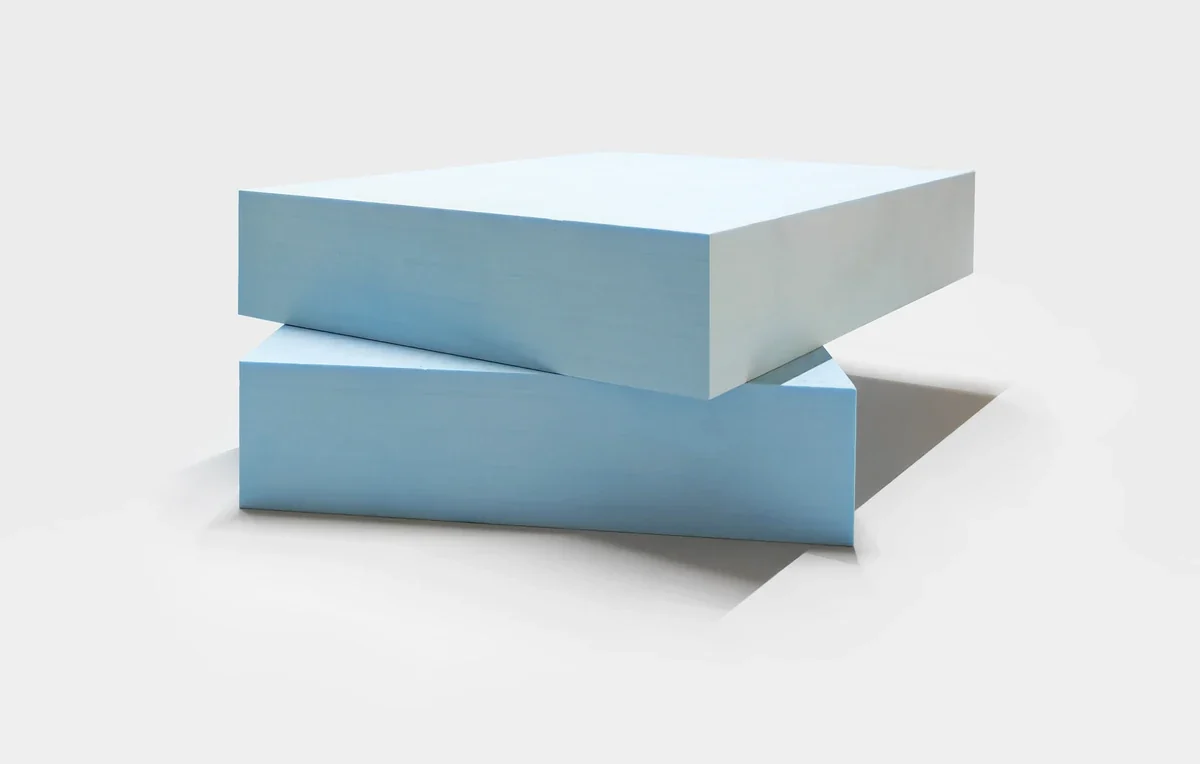
An automotive styling model, a foundry pattern and a heated mould place very different demands on a tooling board. First establish whether heat is involved and whether the board will contact the moulding resin. Then consider accuracy, abrasion resistance and surface finish. Density, hardness and grade selection follow the choice of material system.
01 Four common types of tooling board
The main resin systems are epoxy, polyurethane and unsaturated polyester. Lightweight boards are also polyurethane, but their foamed structure gives them substantially different densities, hardnesses and applications from conventional modelling boards. They are therefore considered separately here.
| Material | Main advantages | Characteristics and applications |
|---|---|---|
| Epoxy tooling board | A range of heat-resistant grades; stable after machining, with a fine surface suitable for epoxy prepreg tooling | Higher cost; thermal expansion remains greater than aluminium and steel. Used for masters in heated tooling processes and suitable small direct moulds |
| Polyurethane board | Modelling grades suit detailed machining and verification models; tooling grades offer differing priorities such as abrasion resistance and compressive performance | Modelling boards serve design reviews. Working tools require grades selected for load and wear; prepreg tooling also requires cure-compatibility testing |
| Unsaturated polyester board | Low cost, useful hardness and straightforward machining and repair | Suitable for shoe-mould masters, colour models and economical ambient-temperature composite moulds; machining produces a noticeable odour |
| Lightweight modelling board | Light and easy to machine or finish by hand; suitable for styling, colour and large models | Lower hardness and indentation resistance. Thin edges and fixing points need protection; intended for model applications |
Fine surface detail in lightweight board depends on small, uniform cells. Coarse-cell foam usually serves as internal support or a substrate. Board used at a model surface needs a fine, consistent structure to reduce filling and sanding after machining.
02 Consider epoxy first for heated tooling
Epoxy boards are the first choice for masters and moulds that require elevated-temperature performance. Ambient-temperature models generally do not need that additional material cost: polyurethane, unsaturated polyester or lightweight boards can be selected by application. With epoxy tooling prepreg, however, cure compatibility matters even when the initial cure temperature is low.
Why use epoxy board for prepreg cured at about 60°C?
A common low-temperature tooling-prepreg route is an initial cure at about 60°C on the master, followed by demoulding and a high-temperature post-cure. The master experiences only the initial cure temperature, which some polyurethane boards can withstand. That still leaves the question of whether the resin at the contact surface cures correctly.
Certain polyurethane boards and other isocyanate-cured systems can inhibit the interfacial cure of heat-cured epoxy prepreg. Toolmakers sometimes describe this as polymerisation inhibition. Its occurrence depends on the board formulation, cure state and prepreg resin system. Heat resistance and cure compatibility are separate requirements.
For these epoxy tooling prepregs, an epoxy-board master is strongly recommended, together with a compatible sealer and release system. If polyurethane or another board is used, first validate the cure with the actual board, coating and prepreg combination.
Where only the initial cure at about 60°C takes place on the master, an epoxy board with a Tg of about 110–130°C is usually a useful starting point, balancing temperature margin and cost. If the composite mould stays on the master during high-temperature post-cure, select the master material against the highest temperature in the complete cycle.
03 Epoxy-board machining quality and dimensional stability
Master accuracy depends on stability after machining and dimensional changes during heating. Epoxy board also needs sufficient toughness and a fine, smooth machined surface to limit repair and finishing work.
- Stability after machining. The board should retain its surface geometry and dimensions after roughing and finishing. For bonded blanks, adhesive cure and support arrangements must also be controlled to prevent warping.
- Lower thermal expansion. Compare coefficients of linear thermal expansion over the actual working temperature range and estimate movement during the initial cure. This becomes more important as tool size and temperature rise increase.
- Adequate toughness. Thin edges, small radii and holes should resist chipping during machining and cracking during heating, cooling and demoulding.
- A fine, smooth surface. Low surface roughness and small pores reduce filling, sanding and sealing work.
- Good machinability. Smooth cutting, less dust and intact edges make it easier to produce a consistent surface, including across local repairs.
A machining trial should include the project's thin edges, deep slots, holes and curved surfaces, so that cutting behaviour, edge integrity and surface quality can be assessed together.
04 Size and support considerations for direct epoxy-board moulds
For small parts and short production runs, machining a mould directly from epoxy board can avoid the composite mould replication stage. Heat-resistant grades are available for consideration in processes at 120°C, 150°C and 180°C. Suitability still depends on stiffness at forming temperature, dimensional movement, sealing and the required number of cycles.
| EPTEK grade | Temperature reference for selection | Selection considerations |
|---|---|---|
| EPBOARD 0700 | 130°C HDT | A candidate for forming at about 120°C; check dwell time and loading at temperature |
| EPBOARD 0700HT | 160°C temperature-class reference | For higher-temperature masters or small moulds; post-cure both board and bondline to the appropriate schedule |
| EPBOARD 1300HT | 185°C heat-resistance value | For high-temperature tooling selection; assess stiffness through the forming cycle, temperature margin and dimensional movement |
HDT is the heat deflection temperature under specified loading and test conditions; Tg is the glass transition temperature. They describe different properties. These thermal indicators support preliminary selection; high-temperature stiffness, dwell time and pressure must also be checked when defining the forming cycle.
Heat resistance does not mean low expansion
Boards of this type often have a coefficient of linear thermal expansion around 40 × 10⁻⁶ K⁻¹, depending on grade, typically greater than aluminium and steel. Heating changes tool surfaces and hole positions; larger tools undergo greater movement.
Estimating expansion for a 500 mm mould
For a 500 mm mould heated from 20°C to 120°C, a coefficient of 40 × 10⁻⁶ K⁻¹ gives the following approximate length change under uniform, unconstrained expansion:
ΔL ≈ 40 × 10⁻⁶ × 500 × 100 = 2 mm
The 2 mm is free thermal expansion for this temperature rise, about 0.4% of the original length. It is not the final dimensional error of the part: resin cure shrinkage, cooling and mould constraints also affect part dimensions. A constrained mould additionally requires assessment of stresses and warping.
Direct epoxy-board moulds are therefore generally used for small parts with principal dimensions within 500 mm. This is a practical selection guideline, not an absolute limit; allowable size depends on temperature rise and part tolerances. Large or tightly toleranced parts are generally better served by machining a board master and reproducing it in a low-expansion composite mould.
Avoid extensive rigid bonding between board and steel plate
A steel plate can support the mould, but its thermal expansion differs from epoxy board. A rigid adhesive over a large area restricts relative movement during heating and cooling and can cause board warping, bond failure or local cracking.
A heat-resistant silicone adhesive can provide a flexible bond to the steel support, allowing the bondline to accommodate relative movement. Bond area, thickness and location must still meet loading requirements. Board-to-board joints instead use a compatible structural adhesive to preserve the blank's stiffness and machining accuracy.
05 Distinguish modelling boards from tooling boards for ambient-temperature use
Ambient-temperature applications fall broadly into models and working tools. Models support styling, assembly or colour reviews; working tools must retain accuracy through repeated use. Their demands for abrasion resistance, load capacity and datum stability differ.
Polyurethane modelling boards
Polyurethane modelling boards are used for engraved prototypes, automotive verification models and colour models. Engraved prototypes need intact patterns and small radii. Verification models check component fit, gaps and flushness; painted colour models support shape and colour evaluation.
PUBOARD 72 suits engraved prototypes for tyre-mould manufacture. Its fine, uniform structure supports machining of patterns, curves and small radii, as well as local repair and modification. The prototype is subsequently used to reproduce the production mould; the board itself does not undergo high-temperature vulcanisation.
PUBOARD 65 suits automotive verification and colour models. Its density is 0.65 g/cm³, hardness approximately Shore D 63 and heat-resistance value 75°C. It is suitable for overall styling, component trial fitting and colour review after painting.
PUBOARD 0780 suits high-quality verification models. Its density of 0.75±0.02 g/cm³ is higher than PUBOARD 65. It supports fine surface, edge and hole machining, and models subject to repeated assembly, measurement and handling.
| Grade | Density, g/cm³ | Hardness, Shore D | Thermal indicator, °C | Typical applications |
|---|---|---|---|---|
| PUBOARD 65 | 0.65 | Approx. 63 | 75 heat-resistance value | Automotive verification and colour models |
| PUBOARD 72 | 0.72 | 65 | 75 heat-resistance value | Engraved tyre-mould prototypes, masters and detailed models |
| PUBOARD 0780 | 0.75±0.02 | 70 | 72 HDT | High-quality verification models and detailed masters |
Values are typical properties. Thermal indicators aid material selection; actual service temperature also depends on load and duration.
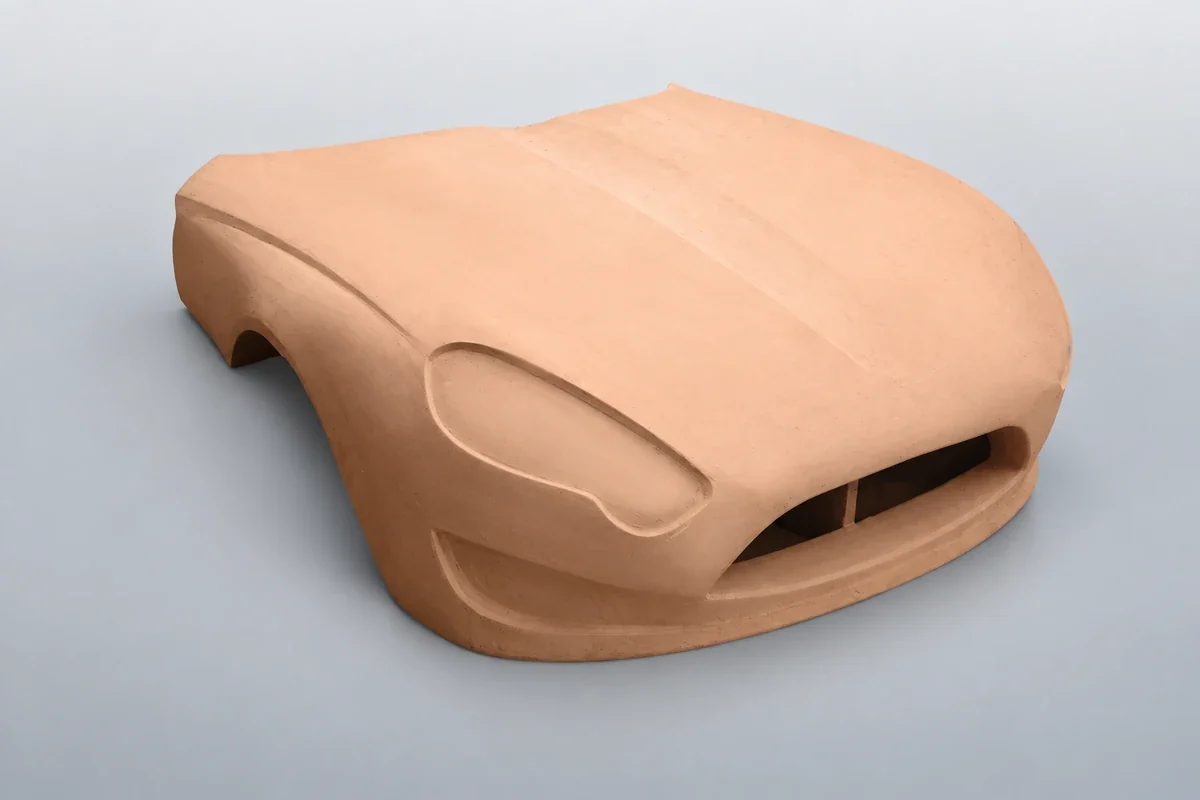
Verification models undergo component trial fitting, measurement and handling. Metal inserts can support threads and locating features that see repeated assembly; thin edges and clamping areas benefit from local reinforcement. Colour models prioritise paint finish, so sealing, primer and sanding time should be included in the cost of board selection.
Three main uses of polyurethane tooling board
Polyurethane tooling boards provide working surfaces or locating datums. Select them according to the job: checking fixtures need stable references, foundry tools need abrasion resistance, and nickel-shell electroforming masters need dimensional control through temperature changes.
| Main application | Suitable grades | Selection priorities |
|---|---|---|
| Checking and holding fixtures | PUBOARD 1650 | Stable surfaces and datums, local load capacity, repeated clamping and retention of hole geometry |
| Foundry patterns, pattern plates and core boxes | PUBOARD 1350 / 1250 | Resistance to sand abrasion, edge integrity, repeated release and compatibility with the core-making process |
| Nickel-shell electroforming masters | PUBOARD 1850 | Dimensional control during temperature changes, dense surfaces, conductive preparation and release |
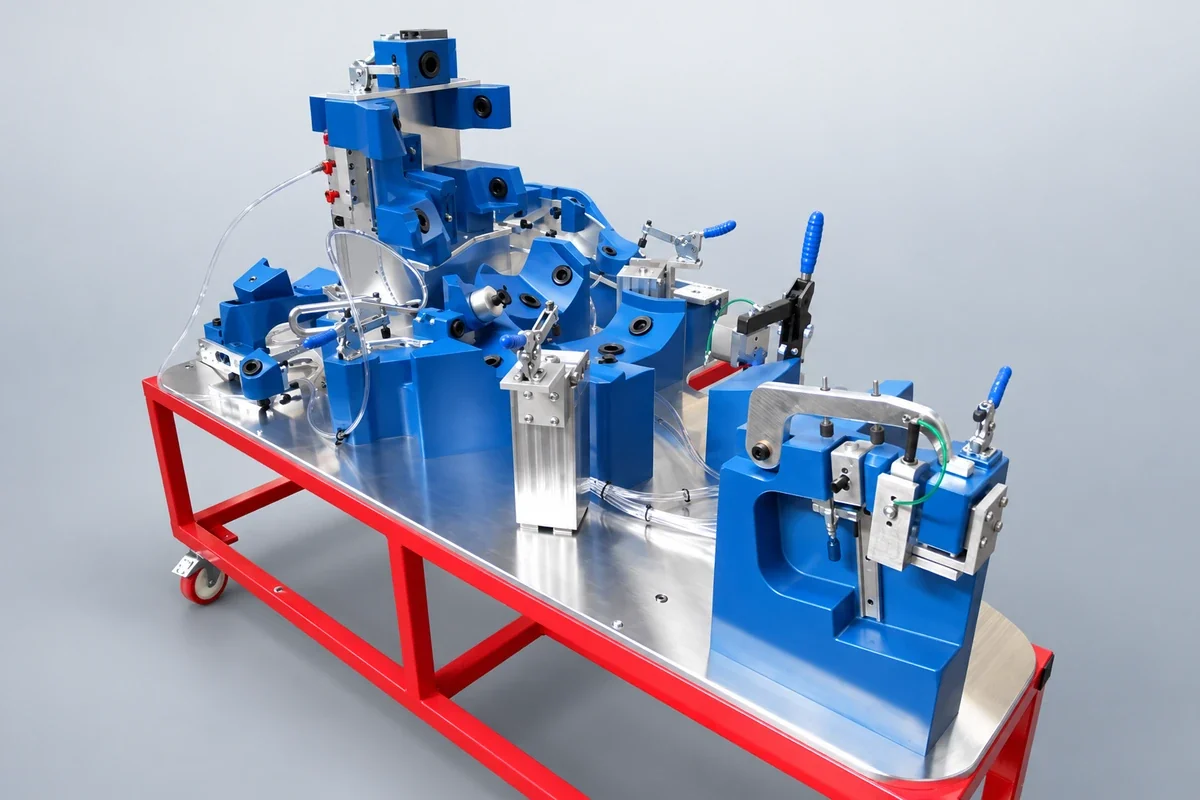
PUBOARD 1650 is an option for checking and holding fixtures. High-density board suits machining of contoured support and locating surfaces. Checking fixtures need stable datums; holding fixtures must also withstand clamping forces and locate repeatedly. Metal inserts, locating pins and baseplate support work with the board to maintain tool accuracy.
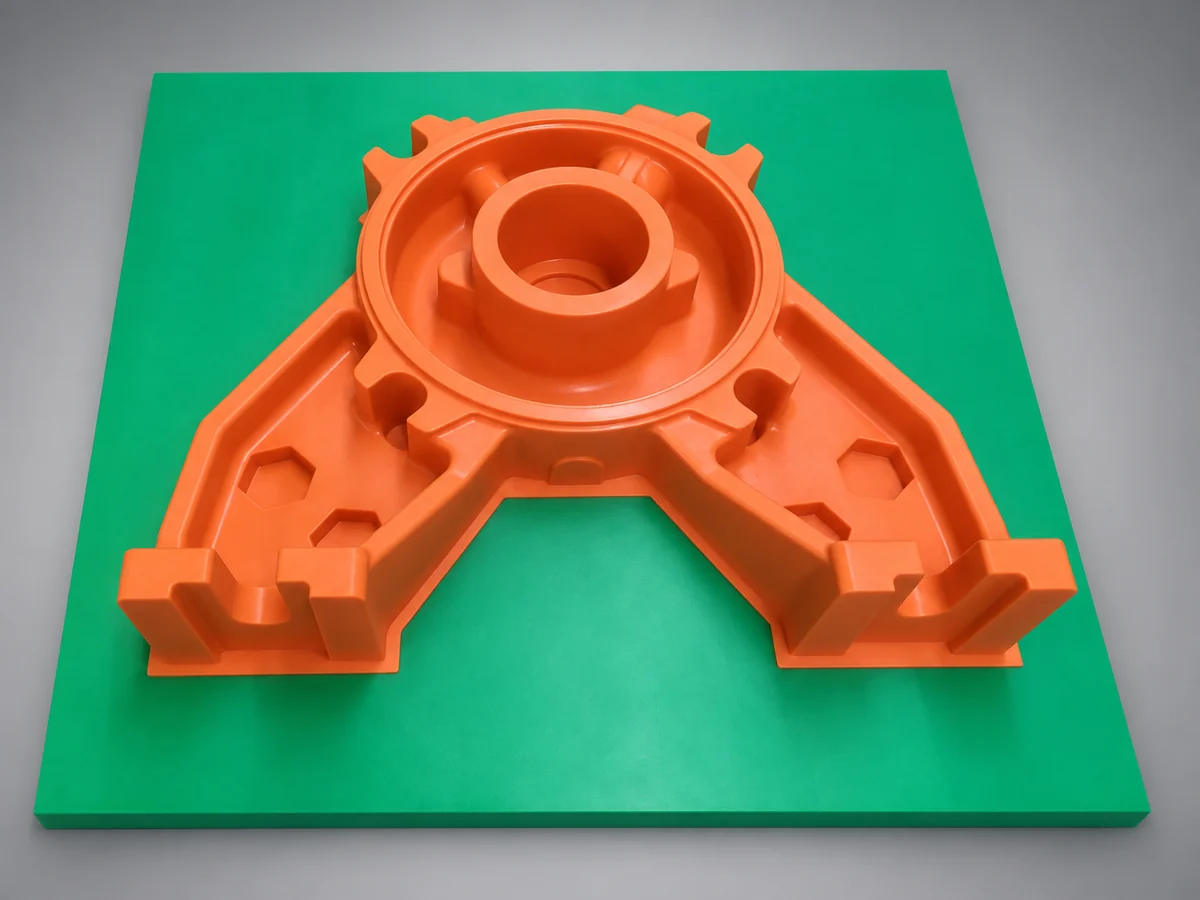
Abrasion-resistant PUBOARD 1350 or 1250 can be used for foundry patterns, pattern plates and core boxes. Repeated sand contact wears surfaces and edges, affecting subsequent sand-mould accuracy. Consider sand, moulding or core-making methods, cleaning and cycle count; heated core-making requires a separate thermal assessment.
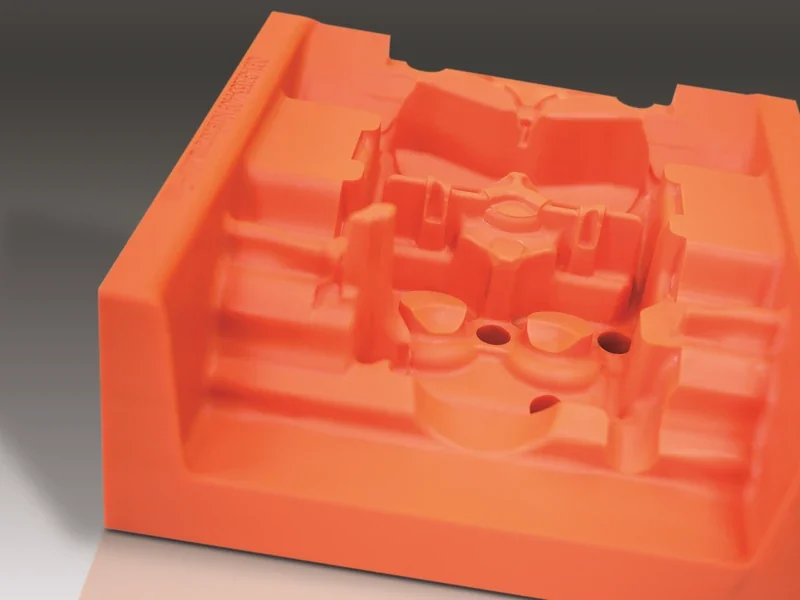
PUBOARD 1850 is an option for nickel-shell electroforming masters. Its high density and dense surface, with high filler content reducing thermal expansion, help control dimensional change during electroforming. After machining, prepare the conductive surface and validate contact with the electroforming bath and subsequent release.
PUBOARD 1850 has an HDT of 95±5°C and a coefficient of linear thermal expansion around 41×10⁻⁶ K⁻¹ over 20–50°C. That coefficient applies to a specific test range. For electroforming above this range, evaluate dimensional movement at the actual process temperatures.
| Grade | Density, g/cm³ | Hardness, Shore D | Thermal indicator, °C | Typical applications |
|---|---|---|---|---|
| PUBOARD 1650 | 1.67 | 86 | 80 heat-resistance value | Checking fixtures, locating fixtures and repeatedly used working tools |
| PUBOARD 1350 | 1.37 | 85 | 90 heat-resistance value | Abrasion-resistant foundry patterns, pattern plates and core boxes |
| PUBOARD 1250 | 1.25±0.05 | 80±3 | 80±3 HDT | Abrasion-resistant foundry patterns, pattern plates and core boxes |
| PUBOARD 1850 | 1.85±0.03 | 89±3 | 95±5 HDT | Nickel-shell electroforming masters and tools requiring high dimensional stability |
HDT means heat deflection temperature. The heat-resistance values and HDT in this table use different assessment methods; neither can be directly equated with continuous service temperature.
Advantages of polyurethane board in foundry tooling
Foundry patterns and core boxes must be machined accurately and retain their surfaces after repeated moulding, cleaning and release. Polyurethane tooling boards combine detailed machining, dimensional stability and abrasion resistance. Compare the following factors when selecting them.
Uniform structure enables fine detail. Board has none of natural timber's grain or knots, giving more consistent cutting behaviour on curves, small radii and patterns. Surface roughness, edge integrity and the machinability of repaired areas all affect subsequent replication.
Accuracy matters during both machining and use. Post-machining warping transfers to patterns and sand moulds; temperature differences, loads and support also alter surfaces in service. Machine and inspect precision tools at a specified temperature, taking particular care over temperature differences on large tools.
Abrasion resistance governs accuracy after repeated moulding. Hardness measures resistance to indentation; abrasion resistance concerns material loss through friction. They are not the same property. Long-term sand contact wears surfaces and edges. Compare abrasion data obtained by the same method, then judge service life against the actual sand, surface treatment and cleaning method.
Assess deformation and cracking separately. Elastic modulus affects deflection under working loads; compressive and flexural strength relate to load capacity; toughness affects cracking at thin edges and release features. Tools subjected to repeated compression should also be checked for residual indentation after unloading.
Release and surface treatment affect long-term use. Release agents, core binders and cleaning methods can affect boards or bondlines. During trials, inspect surfaces and edges after repeated release and establish whether cleaning accelerates wear.
Final casting accuracy depends on several process stages. Pattern dimensions, casting shrinkage, release deformation and machining allowance must share the casting's tolerance budget. Allow for casting shrinkage while also controlling the board's own dimensional movement.
Board serves foundry masters and related tooling; it does not contact molten metal directly. Investment casting also involves wax-pattern tooling and ceramic shells. Select the board for the particular process stage in which it is used.
Unsaturated polyester board
Unsaturated polyester board suits shoe-mould masters, lasts and related models. Its useful hardness and ease of cutting, repair and sanding support shoe contours, edges and patterns at relatively low material cost.
The machined shoe-mould master is used to reproduce production moulds in metal or other materials. If the board itself forms the footwear material, temperature, pressure and service life need separate assessment.
For ambient-temperature, short-run composite projects, unsaturated polyester board can provide an economical master, or a directly machined mould where the process permits. Direct moulding requires assessment of resin contact, cure exotherm, vacuum sealing and repeated release, together with surface sealing. Heated high-temperature tooling requires the appropriate heat-resistant epoxy grade.
Unsaturated polyester board also suits colour and appearance models. Noticeable machining odour is its main drawback. Where workshop ventilation is appropriate and the project can accept the odour, it is generally a lower-material-cost option.
Lightweight modelling board
Lightweight modelling boards are made from fine, uniform polyurethane foam. They are easy to CNC-machine and finish by hand for styling, colour and appliance models, and automotive interior models such as seats and floors. Their low weight makes large bonded blanks easier to handle and modify.
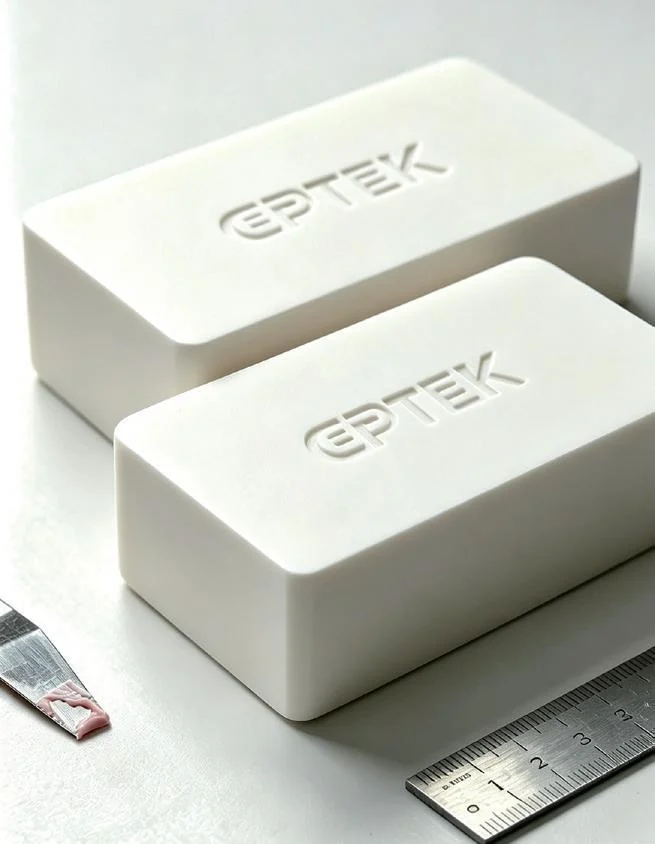
0.15 g/cm³ suits early design models. Machining design data into a physical form allows rapid assessment of volume, proportions and surface flow, followed by cutting, sanding and repair. It can replace clay for some early design checks, but changes are mainly subtractive: unlike clay, it cannot be repeatedly heated, built up and reshaped.
0.20–0.35 g/cm³ suits appliance and automotive interior models. Appliance models usually support appearance and paint reviews; seat and floor models also check space and installation relationships. Select density according to thin edges, detail and handling. Dedicated supports should carry people or substantial connection loads.
0.45 g/cm³ suits more demanding exterior models. Higher density helps preserve detail and edges during fine machining and paint preparation. For prolonged, repeated component assembly or precise datum inspection, also compare PUBOARD modelling grades.
| Grade | Density, g/cm³ | Typical model applications | Selection priorities |
|---|---|---|---|
| L-Board 150 | 0.15 | Early styling models and volume/proportion checks | Easy cutting and hand modification for rapid comparison of initial designs |
| L-Board 200 | 0.20 | Appliance appearance models and preliminary automotive interior forms | Balance low weight, machining efficiency and initial finishing |
| L-Board 250 | 0.25 | Appliance models and interior models such as seats and floors | Compare ease of machining with detail retention |
| L-Board 300 | 0.30 | Detailed appliance and automotive interior models; colour models | Consider thin edges, connections and surface quality after painting |
| L-Board 350 | 0.35 | Models requiring better surface and edge retention | Select for handling, modification and finishing needs |
| L-Board 450 | 0.45 | More demanding automotive exterior and appearance-review models | Balance fine surfaces with finishing; protect clamping and fastening areas |
Lightweight board can be used for colour models, with fine cells reducing sealing and priming work. Its hardness and indentation resistance are generally lower than conventional unsaturated polyester board. Protect thin edges, handling contact areas and fastenings; local connections can use high-density material or metal inserts.
06 Select adhesives together with the board
Large models usually require bonded blanks. The joints become part of the machined surface, so adhesive colour, hardness, shrinkage and cutting behaviour should match the board as closely as possible.
- Epoxy board: EPTEK offers compatible high-temperature epoxy adhesives. Bondline heat resistance and post-cure conditions should match the board and tooling cycle.
- Polyurethane board: select an adhesive suited to board density, with similar colour, hardness and machining behaviour, to reduce tool marks and sanding differences at joints.
- Lightweight board and foam: one- or two-component foam adhesives are options. Moisture-curing one-component adhesives require suitable cure conditions in thick or enclosed joints; two-component products require controlled proportioning and mixing. Hold the blank securely when using expanding adhesive to prevent expansion opening the joint.
Machine bonded blanks after the adhesive has fully cured, and check finished joints for pores and sealing. In prepreg tooling, adhesives, sealers and release systems also contact the resin and should be assessed together for cure compatibility.
In formation needed before selecting a board
Give EPTEK the application, principal dimensions, temperature cycle, loading, cycle count and surface requirements to refine board and adhesive selection. For prepreg tooling, also specify the resin system and curing method.